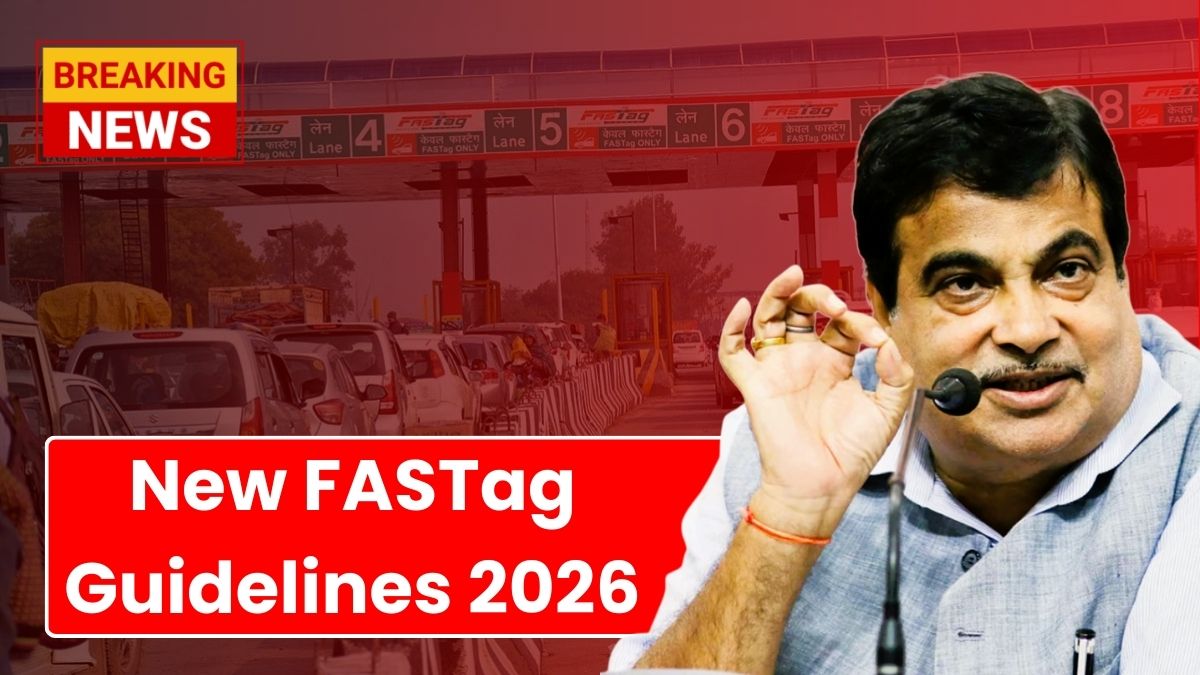
New FASTag Guidelines 2026 : FASTag has become a key part of how we travel on Indian highways. It was introduced to make toll payment easier, faster, and more efficient. Instead of stopping at toll booths and paying cash, vehicles with FASTag simply slow down, the tag gets scanned, and the toll amount gets deducted automatically. Over the years, this has saved countless hours of waiting at plazas and reduced fuel wastage. But with more and more vehicles on the road every year, the system also started facing misuse, fraud, low balances, and confusion over rules. To make toll collection more transparent, discourage cash transactions, and eliminate misuse, the National Highways Authority of India (NHAI) has come up with updated FASTag guidelines that will come into effect from February 2026.
These new rules aren’t just small tweaks. They bring some fundamental changes in how FASTag should be used by every vehicle owner across the country. If you travel on national highways, these updates are important to know because failing to follow them could lead to penalties, suspensions, or even being barred from crossing toll plazas smoothly. So, let’s break down everything in simple words so you can understand how the new system will work and how to prepare for it.
Cash Payments Are Now Completely Banned
One of the biggest changes is that cash payments at toll plazas will no longer be accepted from February 2026. That means if you reach a toll booth without a valid FASTag and try to pay in cash, you won’t be allowed to go through easily. Either you will be asked to recharge your FASTag on the spot, or you might even face a fine. NHAI’s goal behind this shift is to fully embrace cashless travel, which not only speeds up the entire process but also keeps everything transparent and traceable. This move is part of India’s larger push toward digital payments, and it reduces the chances of money being handled incorrectly or missing in the system.

For many years, India has been slowly moving toward digital ways of paying for things—whether it’s shopping, utility bills, or train tickets. Toll plazas are the next big place where digital payments are expected to rule. With cash gone, everyone must ensure their FASTag is active and has enough balance before starting their journey.
KYC Now Mandatory for All FASTag Users
Another major update is that Know Your Customer (KYC) verification is now compulsory for all FASTag accounts. Earlier, many people could get a FASTag with minimal details, and that worked fairly well at first. However, this also opened doors for misuse: some FASTags were issued without proper identity checks, and in some cases, fake or duplicate tags made their way into the system. To prevent such issues and make sure every FASTag is genuine and traceable to a real person, NHAI has made KYC mandatory.
This means your FASTag must be linked to valid documents such as your Aadhaar card, PAN card, driver’s license, or other approved ID proofs. If your FASTag does not complete KYC by the deadline, the authorities may deactivate it. Once deactivated, you won’t be able to use it at toll plazas until the verification is done. Many official channels—like FASTag issuing banks, point of sale centers, and online portals—will remind users to complete KYC in advance so no one is caught unaware.

The main benefit of this is that it helps reduce fraud and makes the system more secure. When every tag is linked to verified personal details, it becomes easier to track misuse and take action.
Stricter Action on Repeat Violations
The updated FASTag guidelines also lay down strict action against repeated rule violations. Suppose a vehicle is found repeatedly entering toll lanes without enough balance, using an expired or invalid FASTag, or trying to bypass toll payment in some way. In that case, the authorities can now suspend or even permanently deactivate the FASTag associated with that vehicle. This is a big step because earlier warnings or small fines were often the only consequences.
By suspending tags for repeat offenders, NHAI wants to encourage drivers to follow the rules responsibly. For honest users, this will actually improve the experience—fewer delays, more reliability, and less chaos at toll plazas. But for those trying to misuse the system, it means there’s now a real cost to breaking the rules.

Maintaining Balance and Correct Tag Placement
One simple but important part of the new rules is making sure that users keep their FASTag wallets topped up. A FASTag must have sufficient balance before you reach a toll booth. If your tag doesn’t have enough money, you could face delays, fines, or denied passage. Many people who travel long distances have experienced the frustration of having a low balance just when they need to pay a toll—now there is a clear emphasis on avoiding that situation.
Another detail that might seem small but matters a lot is how the FASTag is fixed on the vehicle’s windshield. If it’s placed at the wrong height or angle, scanning machines may not read it properly, leading the system to treat it as an invalid or missing tag. So ensuring correct placement—the way issuing banks or service centers recommend—is now a part of following the rules.
The “One Vehicle, One FASTag” Rule
To keep records accurate and avoid confusion, the new guidelines strictly enforce the rule of “One Vehicle, One FASTag.” This means each vehicle can have only one active FASTag linked to its registration number. If a vehicle is found to have multiple active tags, all of them could be deactivated. This may sound strict, but it prevents complications like double charges, mismatched records, and misuse by transferring tags between vehicles. So while you may have multiple FASTags for different vehicles in your family, each car or bike must use only its own tag.
यह भी पढ़े:
 After 12 years, the Tenant will become the Owner of the Property, know the Law Tenant Rights
How These Changes Make Travel Better
When you put all these updates together—no cash, mandatory KYC, penalties for repeat offenders, balance requirements, and single-tag rules—they point to one clear goal: a more reliable, accountable, and efficient toll system. Drivers won’t have to worry about dropping cash envelopes at toll plazas or figuring out whether a cashier is present. Instead, everything becomes electronic, traceable, and faster.
For longer journeys, especially, this means less waiting at toll booths, fewer arguments about payments, and more predictable travel times. And because toll collection becomes more transparent, the chance of errors or disputes also goes down.
Tips to Stay Ready and Compliant
To avoid any trouble when these rules come into effect, every vehicle owner should first check whether their FASTag is active and linked to proper KYC. Next, make sure your FASTag wallet always has enough balance before starting a trip. Fix the tag at the recommended position on your windshield so that the scanner reads it without any issues. Regularly check your FASTag status through your bank’s FASTag app, the official FASTag app, or the toll management portal. Keeping these simple habits will make your highway travel smoother and stress-free.

A Step Toward Smarter Roads
The New FASTag Guidelines 2026 mark an important step toward smarter and more disciplined tolling in India. While some drivers may find the changes strict at first, they are designed to benefit the majority who pay tolls honestly. With cash payments phased out, mandatory KYC for all, clear rules about tag use, and stronger penalties for those who don’t follow the system, the road ahead looks more organized than ever. Drivers who comply with the rules will enjoy faster, hassle-free, and transparent travel across the country’s highways—making journeys more enjoyable for everyone.
Disclaimer: This article is provided for general informational purposes and reflects publicly discussed FASTag guideline updates as of early 2026. The exact implementation, enforcement details, penalties, and timelines are subject to official notifications issued by the National Highways Authority of India, Ministry of Road Transport and Highways, and related authorities. Readers should verify specific requirements and updates through official government sources, issuing banks, or trusted portals before making decisions or planning travel based on this information. This content does not constitute legal, financial, or regulatory advice but is intended to help readers understand the evolving FASTag framework.