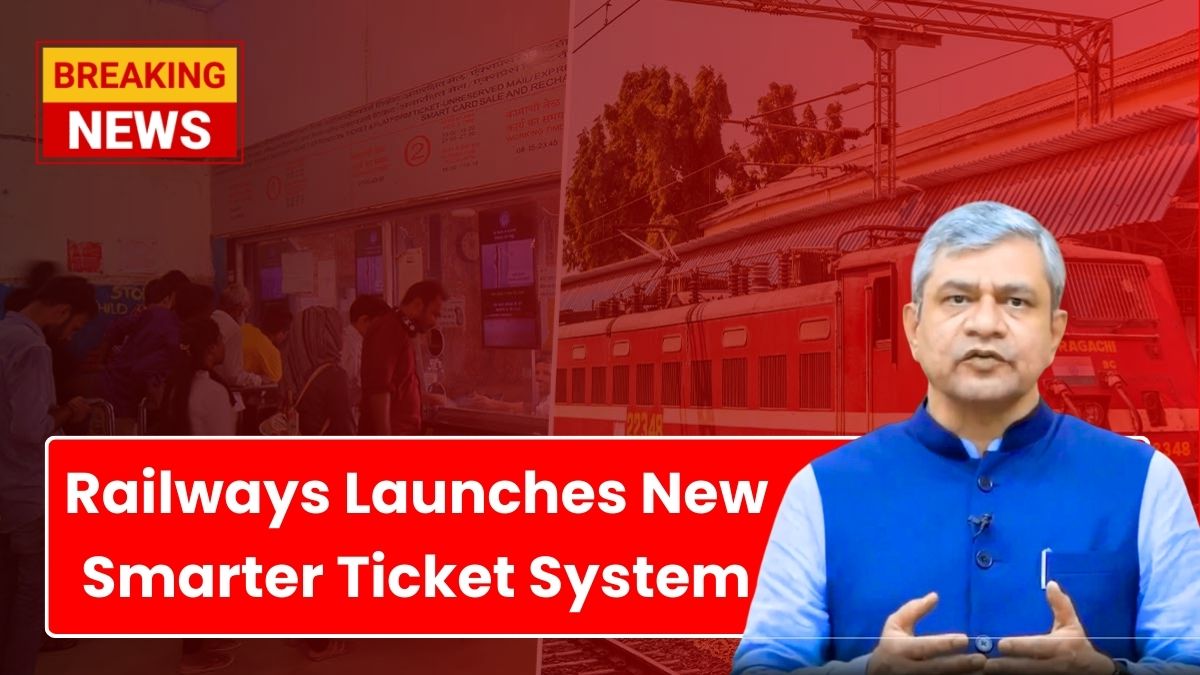
Tatkal Booking New Rules 2026 : The Tatkal booking system has long been one of the most stressful experiences for Indian train travelers. For years, passengers have planned their mornings around those crucial few minutes, constantly refreshing screens, praying that slow internet or a payment glitch wouldn’t ruin urgent travel plans. Over time, what was meant to be a safety valve for last-minute emergencies became a battlefield dominated by automated tools, agents, and users with technical advantages.
With the Tatkal Booking Rules 2026, Indian Railways is attempting to address these problems seriously. Instead of minor adjustments, the changes represent a broader rethink of fairness in a high-demand digital system. Stricter verification, improved backend monitoring, and smarter payment handling have all been introduced to make the system work better for real passengers. This overhaul aims to prioritize identifiable, individual travelers over anonymous speed-based tactics. While execution will determine its long-term success, it signals a significant shift in how the Railways is approaching accountability and access in the digital age.
Why Tatkal Became a Flashpoint for Passenger Frustration
Tatkal was originally introduced as a limited facility for sudden, unavoidable travel needs. Over time, however, it became a routine booking option for millions of office-goers, students, and migrant workers. Popular routes quickly ran out of tickets, and passengers noticed that confirmed seats would disappear within seconds—faster than any human could realistically complete the booking. Complaints about software tools used by agents and repeat offenders flooded social media, and by 2024, the conversation shifted from inconvenience to legitimacy. Passengers began questioning whether public resources were inadvertently enabling private exploitation of scarce seats.

The Verification Push and What It Changes
The centerpiece of the Tatkal Booking Rules 2026 is mandatory user verification. Now, only IRCTC accounts linked to Aadhaar or other government-approved IDs can access Tatkal bookings. While KYC had existed previously, it was optional and easily bypassed with multiple accounts. By enforcing stricter verification, the Railways aims to curb duplicate accounts and bulk bookings. For regular passengers who had already completed KYC, the transition has been smooth. Others now have to prepare in advance and keep their details updated, making personal responsibility as important as speed.
Technology Upgrades to Tackle Bots and Automation
Much of the reform happens behind the scenes. IRCTC has upgraded monitoring systems to detect abnormal booking patterns rather than simply react to complaints. Accounts that navigate pages too quickly or replicate actions across sessions are flagged in real time. The goal is to prevent automated systems from snapping up tickets unfairly. Experts note that this shift reflects a broader philosophy: earlier, systems responded after fraud occurred; now they anticipate it. While no system is perfect, early results suggest automation tools will no longer dominate Tatkal booking windows.
Payments, Agents, and Rebalancing the System
Payment failures were historically the most demoralizing part of Tatkal booking. Even passengers who reached the final step often lost seats due to gateway crashes or bank delays. The 2026 rules address this by improving the payment architecture, enabling multiple gateways to operate simultaneously during peak times. Agents are still allowed, but their Tatkal-hour activity is monitored closely, with sudden spikes triggering automated checks. This doesn’t eliminate agents entirely but prevents bulk capture and gives individual passengers a fairer chance.

Who Gains, Who Adapts, and What Comes Next
Passengers who previously felt left out are the primary beneficiaries. Families, students, and migrant workers now experience a system that feels fairer. Though demand still exceeds supply, the psychological gap has narrowed. On the other hand, frequent Tatkal users must adapt by verifying their profiles, updating details, and planning ahead. Railway officials have hinted at additional measures like staggered booking windows and AI-based demand management. If implemented successfully, Tatkal could become a model for other high-pressure public systems in India.
Trust, Policy Signals, and Broader Implications
Tatkal Booking Rules 2026 carry symbolic weight beyond just seat allocation. By acknowledging long-standing grievances and implementing structural fixes, Indian Railways is signaling that digital equity and accountability matter. In a country where trains are vital for work, education, and family, ensuring fair access has deep social and economic significance. The challenge now is sustainability, as technology evolves and new attempts to exploit the system emerge. Constant updates, monitoring, and transparency will be key to maintaining trust.
Preparing for Tatkal in 2026
For passengers, preparation is now more important than ever. Completing KYC, linking accounts to government ID, and keeping profile details up to date are essential. Understanding the payment system and maintaining a backup option helps prevent last-minute failures. While the rules don’t eliminate competition, they make it fairer and more predictable. Regular travelers may also benefit from observing booking patterns and peak demand times, ensuring they make informed choices rather than relying solely on speed.

Conclusion: A Smarter Tatkal Experience
The Tatkal Booking Rules 2026 are more than just a technical update—they are a cultural shift in how Indian Railways treats its passengers. By focusing on fairness, verifiable identities, and robust technology, the system has moved from being a frustrating race to a more structured, accessible service. Passengers now have a fairer chance at last-minute tickets, while agents and automated tools face stricter limits. Though challenges remain, this new framework represents a step toward a more equitable, responsible, and efficient Tatkal experience for everyone.
Disclaimer
This article is meant for general informational purposes only and is based on publicly available sources and official announcements. Tatkal booking rules, verification requirements, payment procedures, and agent regulations may change at any time according to IRCTC or Indian Railways notifications. Readers are advised to verify the latest details through official IRCTC channels before making travel plans or bookings. This content should not be considered as legal advice or a formal announcement.